

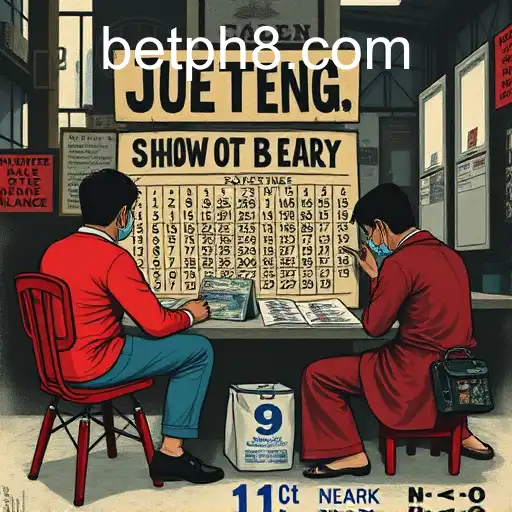

Jueteng is an illicit numbers game that thrives in various regions of the Philippines, characterized by its complex structure and deeply rooted presence in Filipino culture. Despite numerous efforts from authorities to eliminate this illegal lottery, Jueteng continues to flourish, interwoven into the socio-economic fabric of many communities.PH6788
Jueteng's origin traces back to Spanish colonial times, evolving over centuries into the form it exists today. Initially a diversion of the upper class, it eventually panned out into a widely played game among the masses. The name Jueteng is derived from the Spanish "juego de prenda," meaning "game of wits" or "game of clothes," highlighting the game's lasting cultural imprint and its complex relationship with colonial history.
Jueteng involves numbers typically ranging between 1 and 37, where bettors choose a combination in the hope of winning a payout if their numbers are drawn. The ease of access and simple mechanics have made Jueteng a popular gambling choice among the Filipino populace. Bettors, locally known as "kubrador," roam communities collecting bets and delivering the results with remarkable efficiency.
Largely it survives due to its simple, user-friendly system, propelled by the promise of instant gratification. Every draw's allure is heightened by modest stakes transforming into significant returns, a factor considerably appealing within economically challenged areas.
At its core, Jueteng reflects more than just an illegal lottery — it is an economic phenomenon encompassing social dimensions. For some, it is a lifeline, offering a potential escape from poverty's grasp, regardless of the game's illegal status.
Jueteng thrives on the socio-economic disparity prevalent in various regions of the country. The game's grassroots-level involvement, employing local collectors and coordinators, creates a covert yet structured network providing employment to many. Unfortunately, this same dynamic often fuels a cycle of dependency on illegal gambling rather than sustainable development or economic empowerment.ph90
Beyond the economic implications, Jueteng deeply impacts societal structures, introducing layers of protection and patronage within local communities. Political and law enforcement figures are frequently tied into these networks, often accused of accepting bribes in exchange for turning a blind eye. This complex web perpetuates a culture where authorities, deeply intertwined with operations, hinder progress toward effective eradication.
Despite its undeniable expansion, Jueteng remains an illegal activity under Philippine law, viewed as a persistent challenge for law enforcement. The government's response has varied over decades, ranging from targeted crackdowns to large-scale anti-gambling campaigns.PHMACAO
The Philippine government classifies Jueteng as a form of illegal gambling, maintaining strict regulations against its proliferation. Yet, herein lies the challenge: regulatory measures face resistance, rooted in Jueteng's socio-cultural significance. Regulatory efforts are often counteracted by those benefiting from the multimillion-peso enterprise that Jueteng constitutes.
Efforts to dismantle the Jueteng network are typically met with logistical and practical complications. The clandestine nature of operations, coupled with community support and involvement, serves as a confusing barrier for effective enforcement. Additionally, systemic corruption within judicial and law enforcement spheres further impedes any sustained progress against Jueteng's spread.
Media portrayal plays a significant role in shaping public understanding and attitude towards Jueteng. Depictions vary, from highlighting Jueteng as a social threat to addressing its cultural entrenchment and socio-economic implications.
Public perception is divided; many see it as a means of livelihood amidst economic hardship, while others focus on its portrayal as a source of corruption and societal degradation. This dichotomy ensures Jueteng remains a controversial topic in public discourses about gambling and legislation in the Philippines.
Deliberations on Jueteng's future pivot around whether to suppress or regulate it, echoing discussions that challenge the status quo of gambling laws and regulations. Some propose regulating Jueteng as a potential source of revenue for community development, while others underscore the importance of sustained efforts to combat its persistence within legal frameworks.okokslot
Regulation discussions often arise in tandem with conversations about the Philippine Charity Sweepstakes Office (PCSO) expanding its reach and legitimacy. Considered in these discussions is the balancing act of recognizing Jueteng's societal role without endorsing illegal activities.
In essence, resolving the Jueteng issue requires a multifaceted approach addressing underlying socio-economic inequalities and advancing transparent governance structures.
999PHL
Discover the enchanting world of Book of Mystery, an intriguing game that combines strategic thinking with captivating storytelling. Learn about its unique features, gameplay, and how it connects with current events through its innovative PH8 mechanism.

Discover the exhilarating adventure, intrigue, and strategy involved in PyramidRaider as players decipher the enigmatic world of ancient pyramids.

Dive into the vibrant world of FruityCarnival, a game that combines excitement with strategy, set in a playful carnival atmosphere.

Dive into the captivating game of NinjaRaccoon, exploring its unique features, gameplay, and rules with insights related to recent gaming trends.

Explore the exciting world of WinningMask, where strategic gameplay and innovative mechanics come together. Learn about the rules and current trends that make this game a must-play.

Discover the exhilarating world of BoomFiesta and explore its rules, gameplay, and unique features. Engage with current gaming events as you dive into this action-packed game.
